
July 1, 2024
exhibition
hybrid
The Atlas of Domestic Futures
A curatorial proposal and research project imagining speculative houses designed from local narratives across the Philippines, domestic architectures that respond to climate change as lived reality. The project foregrounds voices usually excluded from architectural futurism, insisting that those most affected must shape what viable futures look like.
Speculation as a redistribution of authorship
Project Stats
Medium: Curatorial proposal + speculative architectural research
Dimensions: Not applicable
Developed from a curatorial proposal for the 19th Venice Architecture Biennale (Philippine Pavilion)
Collaborators: Ar. Harvey Vasquez and Ar. Robin Ravago
🔗 LINK TO THE VIDEO WALKTHROUGH
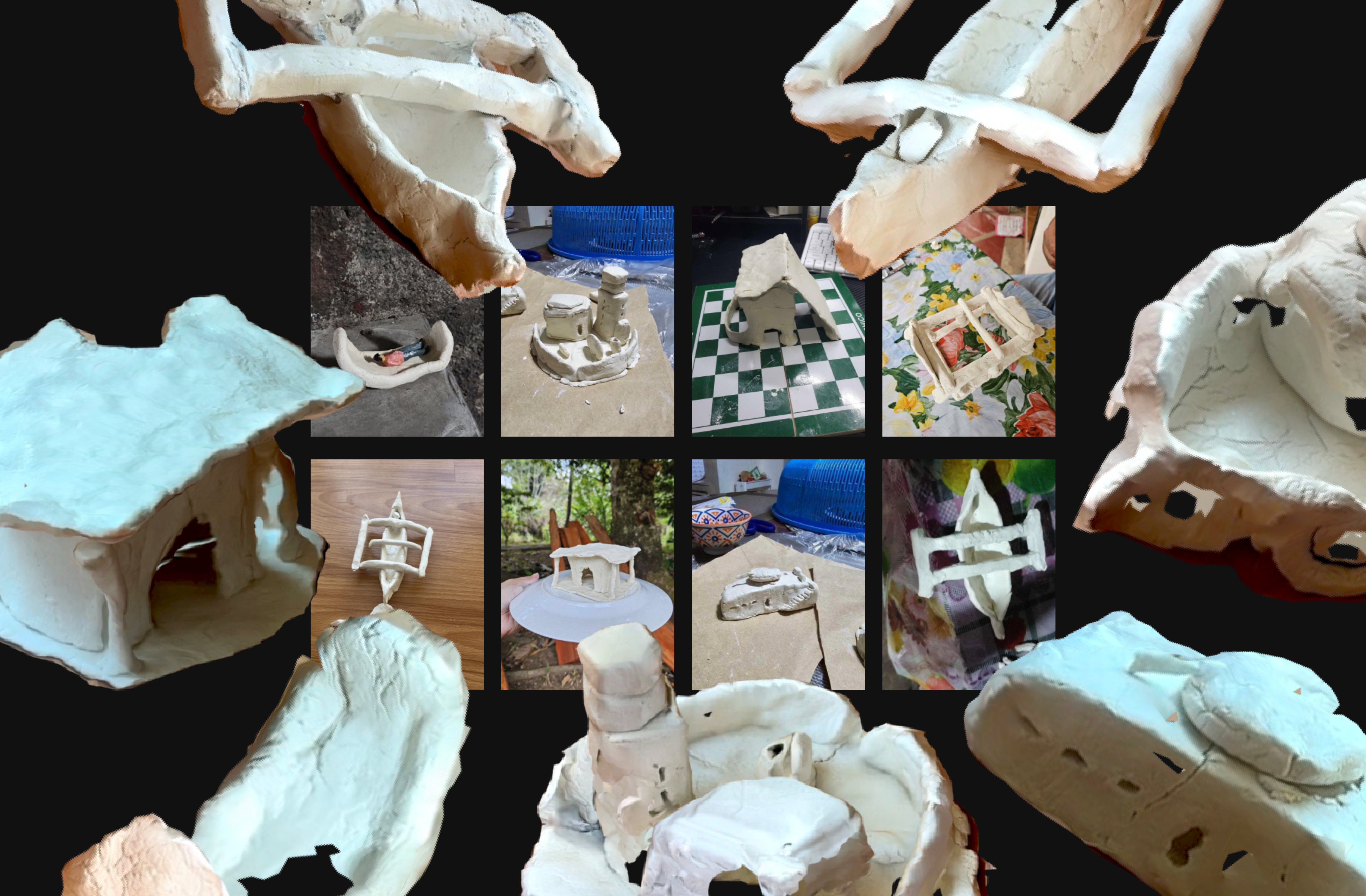
Architecture's future narratives are often dominated by recognizable names and imported problems. The Atlas of Domestic Futures reverses the direction: it begins with local stakes and unspoken domestic realities shaped by climate change. Through speculative architecture, the project converts lived narratives into cogent spatial propositions, houses that do not merely adapt, but encode what adaptation means for specific places and people.
The atlas format matters. It positions each house not as isolated concept, but as part of a national field of futures, plural, uneven, and politically charged. The project is ongoing: less a finished catalog than a framework for listening and translating.

The house as narrative equipment
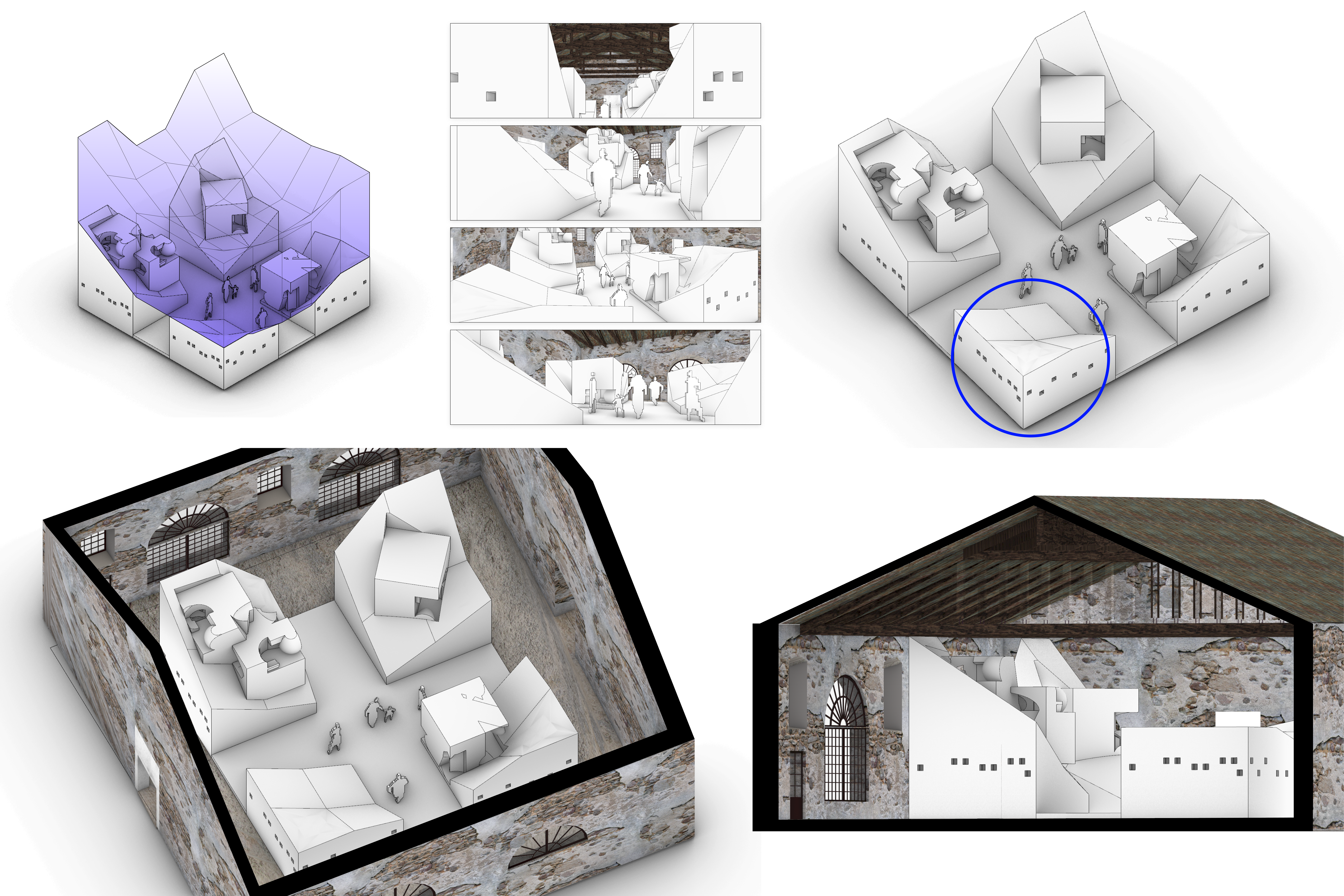
Each proposal treats domestic space as climate interface. Not a green-tech showcase, but a lived system shaped by heat, water, migration, repair, and community memory. The project insists that climate change is not an abstract global problem. It arrives at the scale of kitchens, roofs, thresholds, and sleeping arrangements. By centering local narration, the atlas argues for a different design ethic: futures that are not exported, but authored from within. In this context, the “speculative” is not escapist. It is a tool for making marginalized stakes legible and actionable.




July 1, 2024
exhibition
hybrid
The Atlas of Domestic Futures
A curatorial proposal and research project imagining speculative houses designed from local narratives across the Philippines, domestic architectures that respond to climate change as lived reality. The project foregrounds voices usually excluded from architectural futurism, insisting that those most affected must shape what viable futures look like.
Speculation as a redistribution of authorship
Project Stats
Medium: Curatorial proposal + speculative architectural research
Dimensions: Not applicable
Developed from a curatorial proposal for the 19th Venice Architecture Biennale (Philippine Pavilion)
Collaborators: Ar. Harvey Vasquez and Ar. Robin Ravago
🔗 LINK TO THE VIDEO WALKTHROUGH
Architecture's future narratives are often dominated by recognizable names and imported problems. The Atlas of Domestic Futures reverses the direction: it begins with local stakes and unspoken domestic realities shaped by climate change. Through speculative architecture, the project converts lived narratives into cogent spatial propositions, houses that do not merely adapt, but encode what adaptation means for specific places and people.
The atlas format matters. It positions each house not as isolated concept, but as part of a national field of futures, plural, uneven, and politically charged. The project is ongoing: less a finished catalog than a framework for listening and translating.
The house as narrative equipment
Each proposal treats domestic space as climate interface. Not a green-tech showcase, but a lived system shaped by heat, water, migration, repair, and community memory. The project insists that climate change is not an abstract global problem. It arrives at the scale of kitchens, roofs, thresholds, and sleeping arrangements. By centering local narration, the atlas argues for a different design ethic: futures that are not exported, but authored from within. In this context, the “speculative” is not escapist. It is a tool for making marginalized stakes legible and actionable.