January 7, 2026
exhibition
Hybrid
Worlding Architecture
An exhibition proposing that future environments will not only be constructed, they will be worlded. Across installations, speculative structures, and digital interventions, the work positions architecture as synthesis: space shaped by material, perception, interaction, and code, assembled into a total-ecology condition.
Architecture expanded into a total artwork
Project Stats
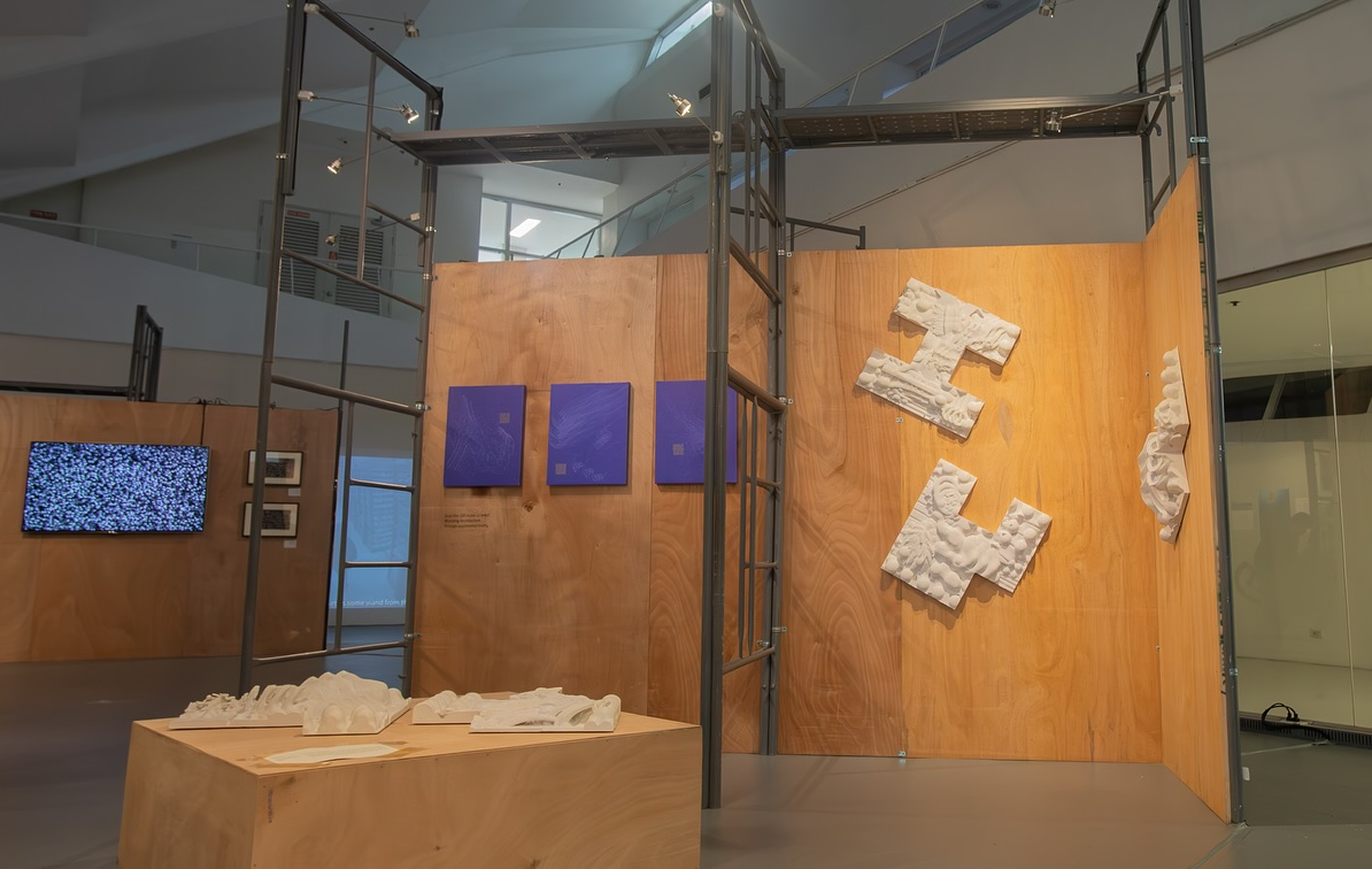
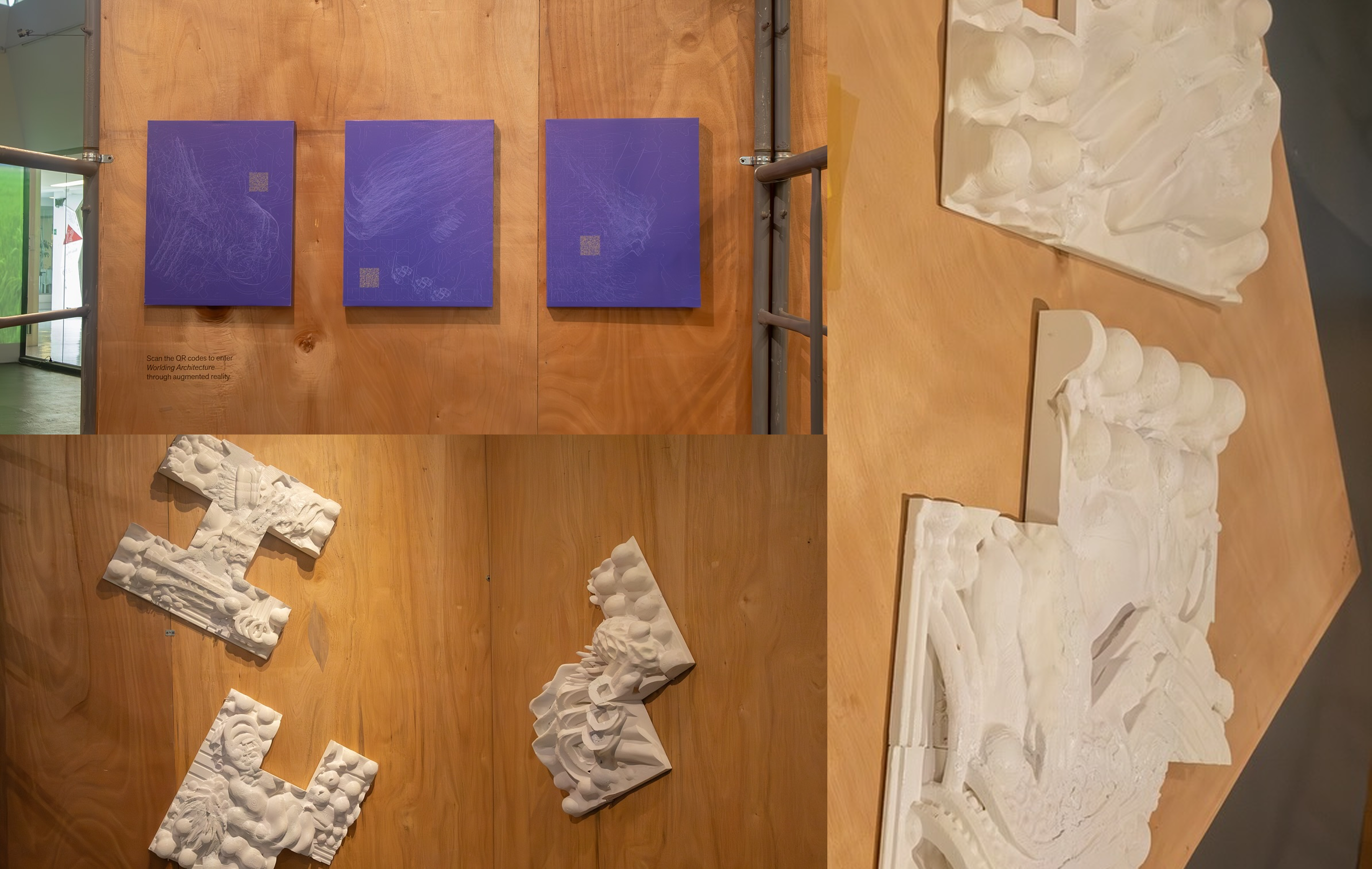
Medium: 3 canvas printed artworks (Fuzzy Forms) + 6 3D printed bas reliefs (Hyper Prouns) + installation arrangement
Dimensions: Varies (Fuzzy Forms: 16 x 20 in each; Hyper Prouns: 2 x 2 ft each)
Exhibited In / Published In: Benilde Center for Campus Art Exhibitions (CCX); Art in the Park 2024
Worlding Architecture treats architecture as an act of composition across realities. Instead of isolating objects, it assembles them into an interconnected ecology, forms, systems, atmospheres, designed to resist passive viewing. The exhibition reflects on how digital experiences are becoming increasingly felt through the body as much as the screen: algorithmic feeds and synthetic surfaces collapsing the line between real and virtual.
Worlding is skeptical of site-based gravity. It prefers free-floating typologies, disjunction, and weird mechanics of presence. The work embraces contradiction: vivid but fleeting, ambiguous yet intentional, architecture as cinema within the cinematic.

Worlding as a spatial ethic
To world is to design continuity. Not a single object, but a field of relations that makes the viewer move differently, feel differently, linger differently. The show treats the gallery like an atmosphere generator: prints as color weather, reliefs as compressed topologies, gaps as intentional voids. Worlding argues that architecture today is not limited to buildings. It is a choreography of perception across physical and digital layers, an expanded practice that must account for how reality is increasingly constructed through interfaces, images, and behavioral loops.




January 7, 2026
exhibition
Hybrid
Worlding Architecture
An exhibition proposing that future environments will not only be constructed, they will be worlded. Across installations, speculative structures, and digital interventions, the work positions architecture as synthesis: space shaped by material, perception, interaction, and code, assembled into a total-ecology condition.
Architecture expanded into a total artwork
Project Stats
Medium: 3 canvas printed artworks (Fuzzy Forms) + 6 3D printed bas reliefs (Hyper Prouns) + installation arrangement
Dimensions: Varies (Fuzzy Forms: 16 x 20 in each; Hyper Prouns: 2 x 2 ft each)
Exhibited In / Published In: Benilde Center for Campus Art Exhibitions (CCX); Art in the Park 2024
Worlding Architecture treats architecture as an act of composition across realities. Instead of isolating objects, it assembles them into an interconnected ecology, forms, systems, atmospheres, designed to resist passive viewing. The exhibition reflects on how digital experiences are becoming increasingly felt through the body as much as the screen: algorithmic feeds and synthetic surfaces collapsing the line between real and virtual.
Worlding is skeptical of site-based gravity. It prefers free-floating typologies, disjunction, and weird mechanics of presence. The work embraces contradiction: vivid but fleeting, ambiguous yet intentional, architecture as cinema within the cinematic.
Worlding as a spatial ethic
To world is to design continuity. Not a single object, but a field of relations that makes the viewer move differently, feel differently, linger differently. The show treats the gallery like an atmosphere generator: prints as color weather, reliefs as compressed topologies, gaps as intentional voids. Worlding argues that architecture today is not limited to buildings. It is a choreography of perception across physical and digital layers, an expanded practice that must account for how reality is increasingly constructed through interfaces, images, and behavioral loops.