
January 18, 2026
graphic
Tangible
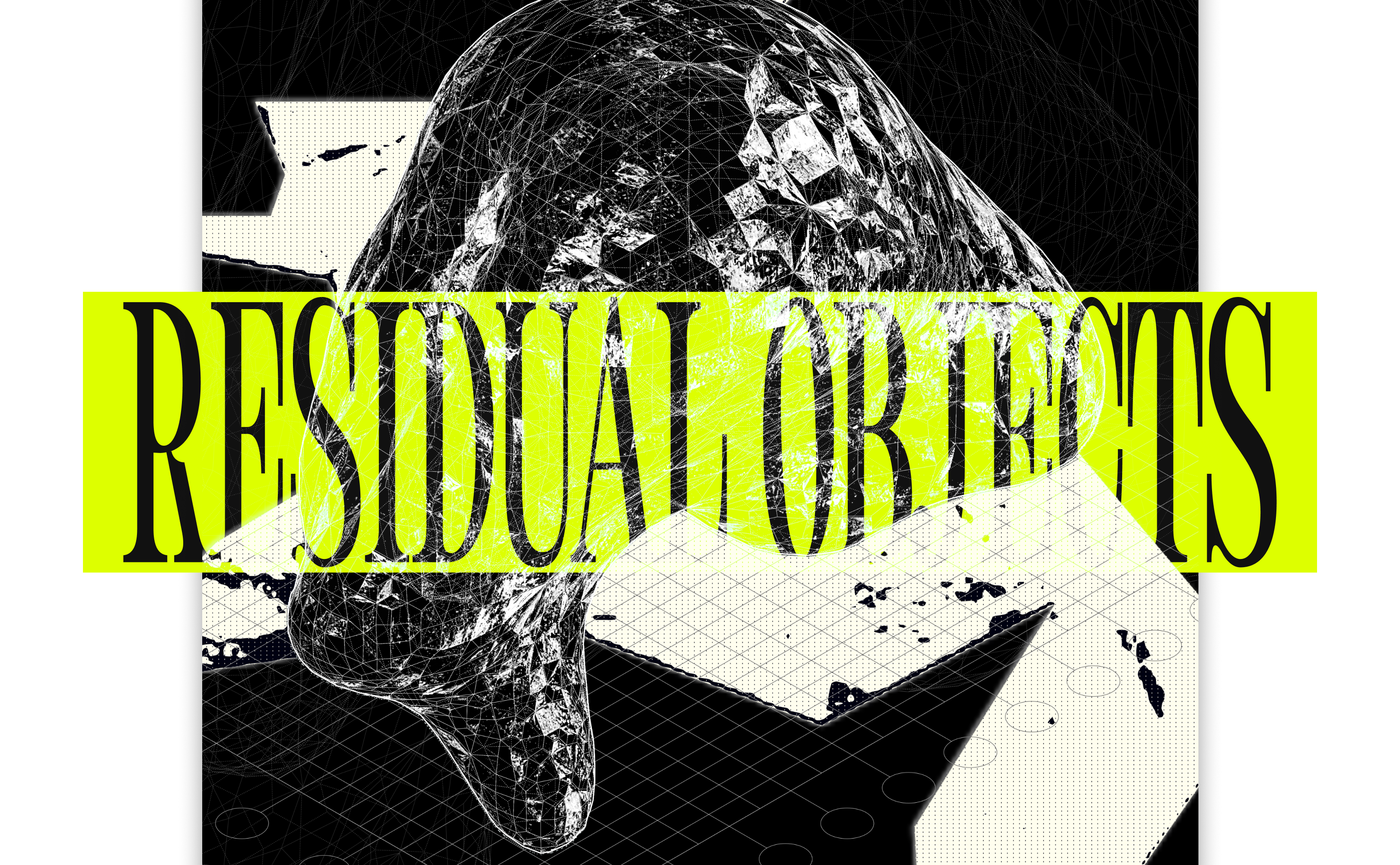
Residual Objects
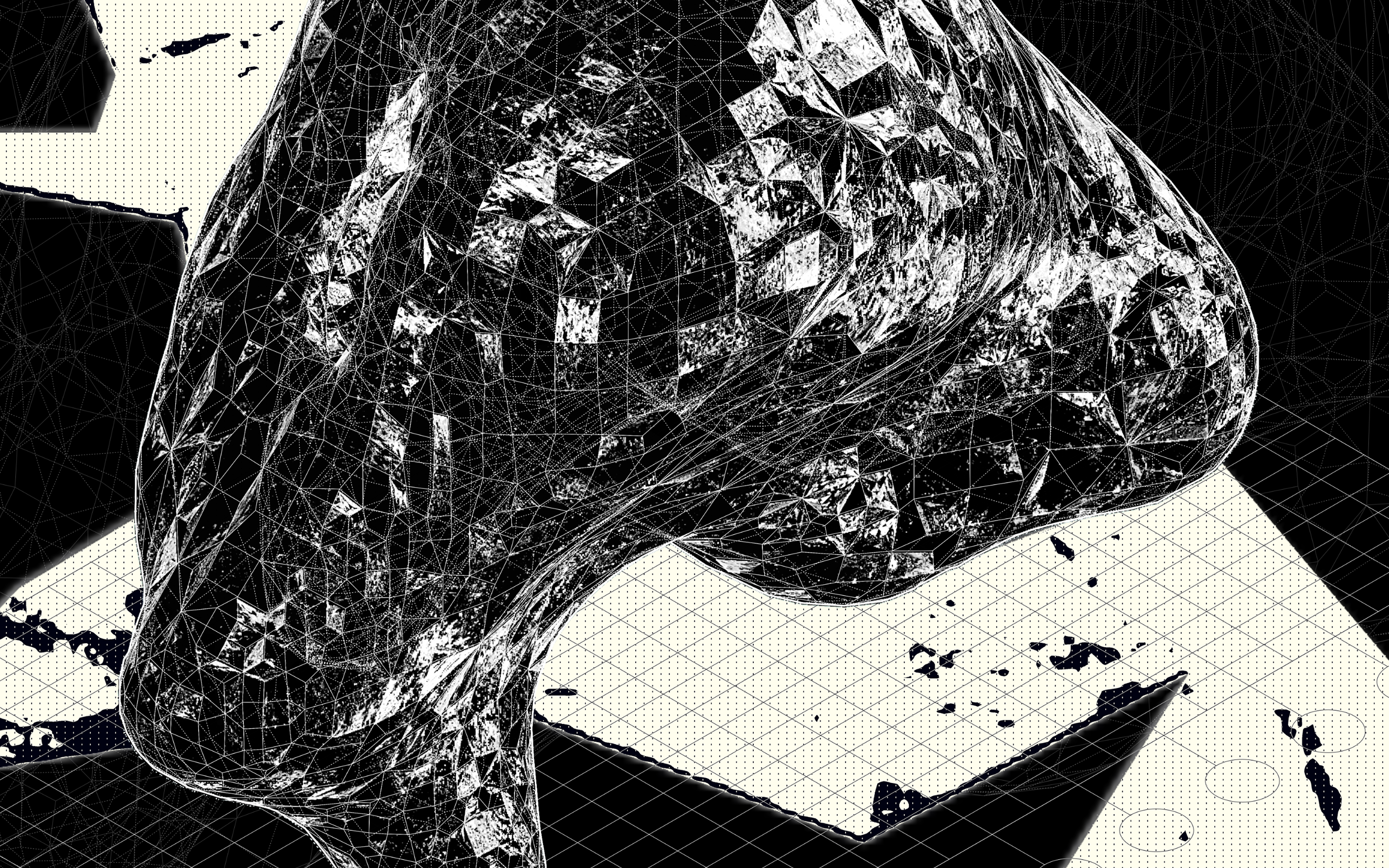
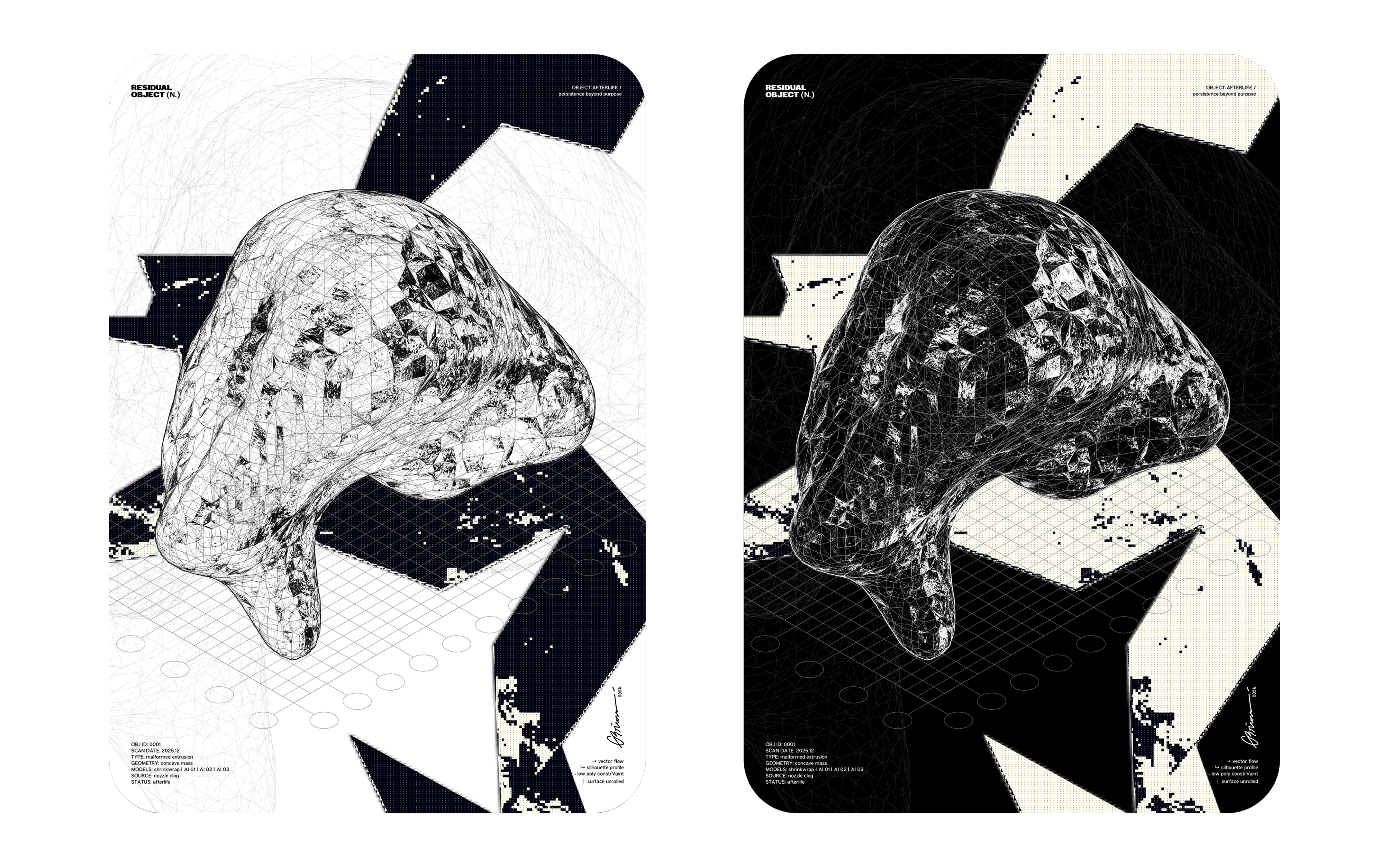
A failed 3D print becomes an origin point. A nozzle clog produces a machinic asteroid; instead of troubleshooting away the failure, the object is allowed to persist, scanned, compressed, and reinterpreted across platforms. Failure becomes a generative condition and the beginning of a new object body.
Failure that refuses to disappear
Project Stats
Medium: Giclee print
Dimensions: 594 x 841 mm
Select printed works available; inquiries via DM IG: @gabbriosostudio
A three-hour clog is usually just a problem to solve. Here it becomes a form to protect. The failed print is treated as machinic residue: evidence of a system breaking, and therefore revealing itself. Instead of restoring the workflow to normal, the project keeps the abnormality alive by scanning and translating it through different representations.
Residual Objects argues that failure is not merely interruption. It is a material event. It produces shapes that intention alone rarely yields: compressed, accidental architectures. The print becomes both document and monument, marking the moment where troubleshooting was replaced by worlding.
A monument to the glitch
Residual Objects treats the clog as a design collaborator. The work refuses the idea that production should always be corrected back into smoothness. Instead, it treats the error as a rare event, a moment where the machine’s hidden conditions become visible: temperature, friction, timing, fatigue. By scanning and recomposing the residue, the project extends the failure’s lifespan and turns it into a portable artifact. The print reads like a fossil of a workflow, suggesting that the future archive of digital making will be filled not only with successes, but with the shapes that accidents insisted on producing.




January 18, 2026
graphic
Tangible
Residual Objects
A failed 3D print becomes an origin point. A nozzle clog produces a machinic asteroid; instead of troubleshooting away the failure, the object is allowed to persist, scanned, compressed, and reinterpreted across platforms. Failure becomes a generative condition and the beginning of a new object body.
Failure that refuses to disappear
Project Stats
Medium: Giclee print
Dimensions: 594 x 841 mm
Select printed works available; inquiries via DM IG: @gabbriosostudio
A three-hour clog is usually just a problem to solve. Here it becomes a form to protect. The failed print is treated as machinic residue: evidence of a system breaking, and therefore revealing itself. Instead of restoring the workflow to normal, the project keeps the abnormality alive by scanning and translating it through different representations.
Residual Objects argues that failure is not merely interruption. It is a material event. It produces shapes that intention alone rarely yields: compressed, accidental architectures. The print becomes both document and monument, marking the moment where troubleshooting was replaced by worlding.
A monument to the glitch
Residual Objects treats the clog as a design collaborator. The work refuses the idea that production should always be corrected back into smoothness. Instead, it treats the error as a rare event, a moment where the machine’s hidden conditions become visible: temperature, friction, timing, fatigue. By scanning and recomposing the residue, the project extends the failure’s lifespan and turns it into a portable artifact. The print reads like a fossil of a workflow, suggesting that the future archive of digital making will be filled not only with successes, but with the shapes that accidents insisted on producing.