
January 15, 2026
experiment
Digital
Machine Logs 01-02
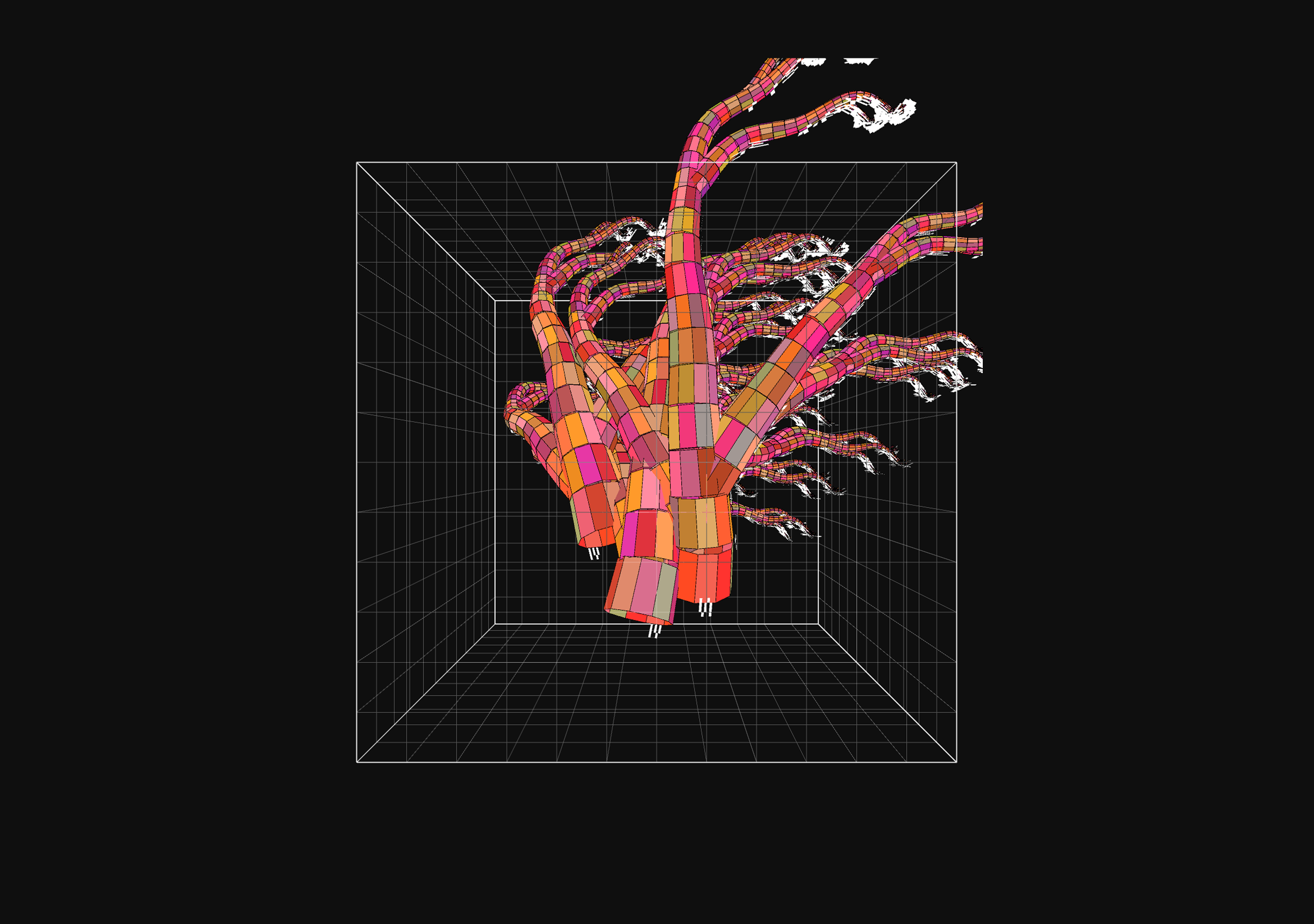
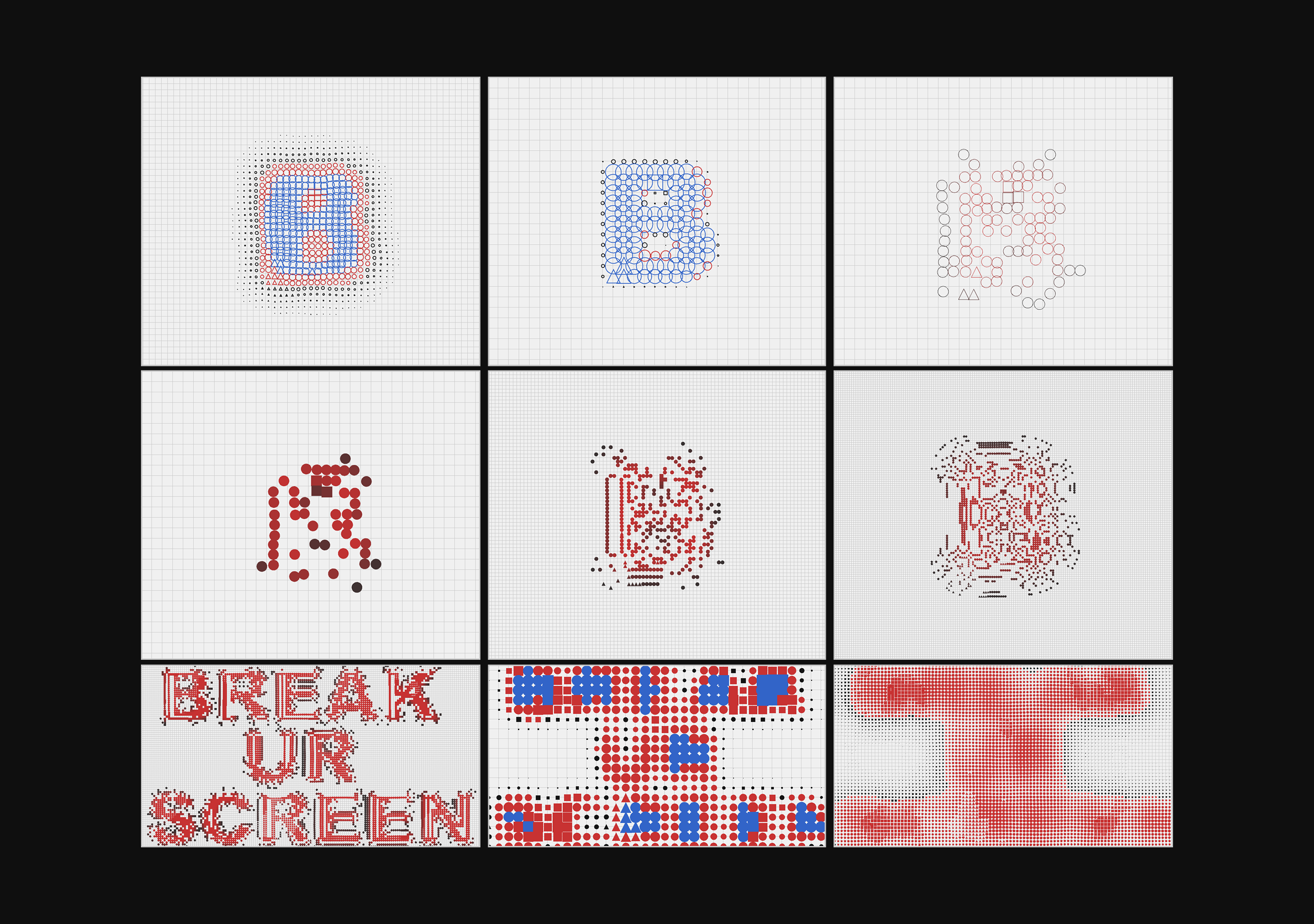
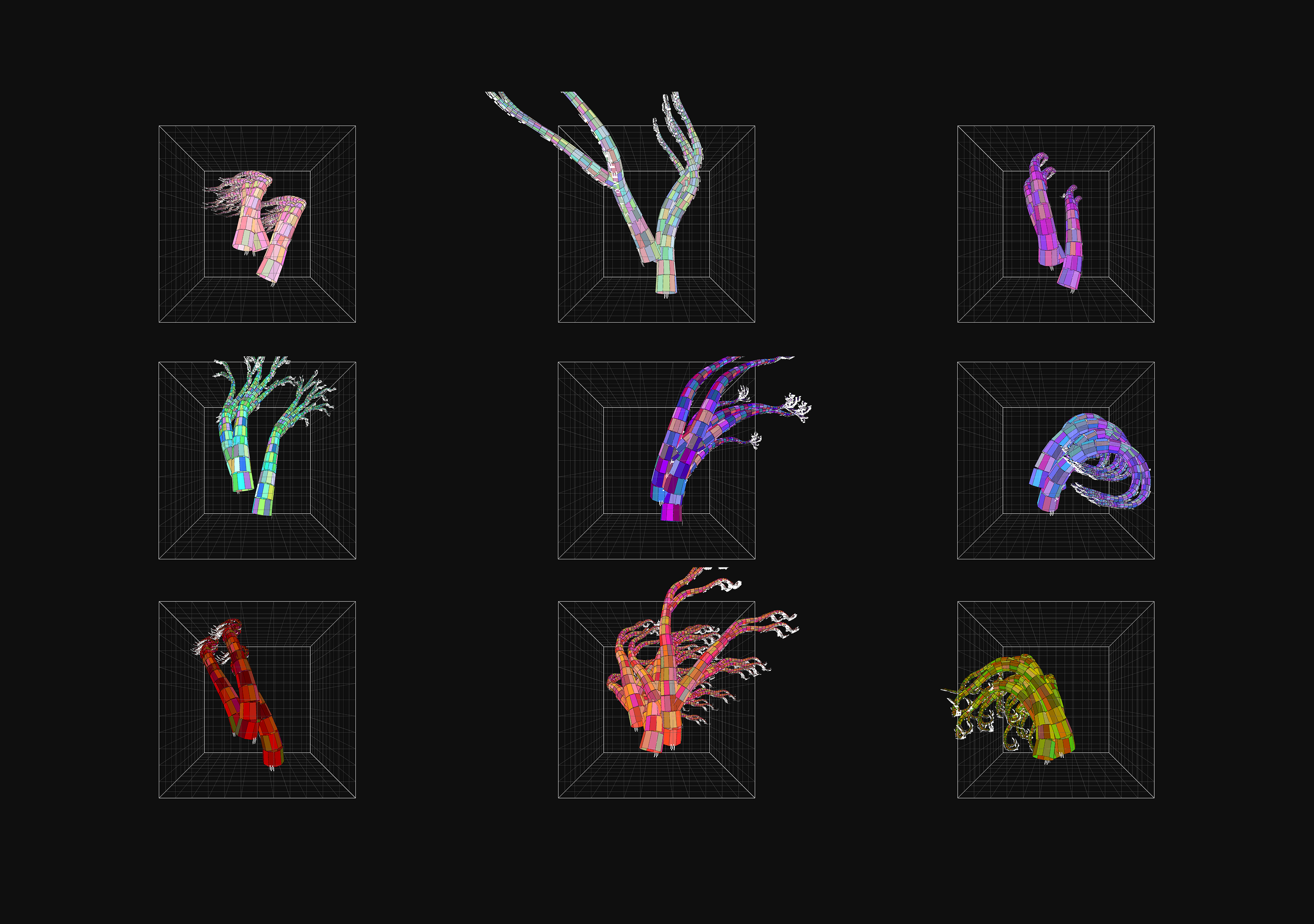
An attempt to force conversational AI into visual territory and let it produce something uncanny. Machine Logs treats AI not as assistant but as misused collaborator, extracting strange formal tendencies and translating them into tactile surface.
Misusing AI until it becomes visual
Project Stats
Medium: GenAI and Processing
Machine Logs starts from a refusal: to keep AI confined to language. By pushing conversational systems toward form, the project treats the model's wrongness as aesthetic raw material, tendencies that feel tentacular, too-much, slightly off-register.
The work positions these outputs as logs: traces of a machine learning how to speak visually through misuse. Rather than aiming for polish, it aims for intentional uncanniness, an inquiry into how AI can be steered away from correctness and toward weird specificity.
The surface as transcript
A log is not a portrait of a machine. It is a record of contact. Machine Logs suggests that the most interesting part of AI is not its accuracy, but its failure modes, the moments where it reveals a different logic of association. By materializing those tendencies, the work refuses the clean interface. It turns AI into something you can read through texture, seams, and improbable junctions. The object becomes a kind of physical prompt history, a reminder that “intelligence” here is always mediated, always translated, always partial.




January 15, 2026
experiment
Digital
Machine Logs 01-02
An attempt to force conversational AI into visual territory and let it produce something uncanny. Machine Logs treats AI not as assistant but as misused collaborator, extracting strange formal tendencies and translating them into tactile surface.
Misusing AI until it becomes visual
Project Stats
Medium: GenAI and Processing
Machine Logs starts from a refusal: to keep AI confined to language. By pushing conversational systems toward form, the project treats the model's wrongness as aesthetic raw material, tendencies that feel tentacular, too-much, slightly off-register.
The work positions these outputs as logs: traces of a machine learning how to speak visually through misuse. Rather than aiming for polish, it aims for intentional uncanniness, an inquiry into how AI can be steered away from correctness and toward weird specificity.
The surface as transcript
A log is not a portrait of a machine. It is a record of contact. Machine Logs suggests that the most interesting part of AI is not its accuracy, but its failure modes, the moments where it reveals a different logic of association. By materializing those tendencies, the work refuses the clean interface. It turns AI into something you can read through texture, seams, and improbable junctions. The object becomes a kind of physical prompt history, a reminder that “intelligence” here is always mediated, always translated, always partial.