January 5, 2026
article Tag
Machine Logs
First time writing about artificial intelligence after 5 years of using it. Reflecting on how my art-design practice was insidiously shaped by it.
AI, Art-Design Practice and the Bauhaus
I have never sat down to write my thoughts about the developments of AI in recent years and how it has impacted the way I do things. Lately, I’ve felt the urge to take a step back and timestamp this era in my practice so I’m more conscious of how I navigate toward and/or around it (before I start devouring my next PS5 agenda, lelz). At the core of why I do what I do, architecture still serves as the fundamental driver of my disposition toward how new technological developments signal the need to reinvent practice.
Out of the masters of the Bauhaus, all of whom I have attempted to probe and understand, Moholy-Nagy’s photograms [1] most strongly encapsulate Gropius’ vision of unity between art and technology. Photography, still new at the time and often used simply to capture scenes [2], was treated by Moholy-Nagy as part of the image-making process itself, or the collage, which is arguably one of the most important tools architects use to visualize space. Looking into this intentional misuse of technology strongly informed my attitude toward new tools: skeptical, yet eager to take hold of them and “enslave” [3] them.

Attempts at Misusage
The primitive, drunken machine vision of AI in 2020 evolved into something I did not anticipate five years ago, and now I find myself at an impasse with it. This pushed me to revisit one of the original reasons I considered a career in technology: creative coding. Even though I no longer know how to do it from scratch, like most interaction designers I know, coding was our entry point into tech and design. Learning it was tedious, especially during a time when AI was almost nonexistent in the web sphere. I distinctly remember being fascinated when Tim Rodenbroker drew parallels between the Bauhaus Manifesto and the Creative Coding Manifesto [8], an idea that likely stemmed from John Maeda’s early explorations.
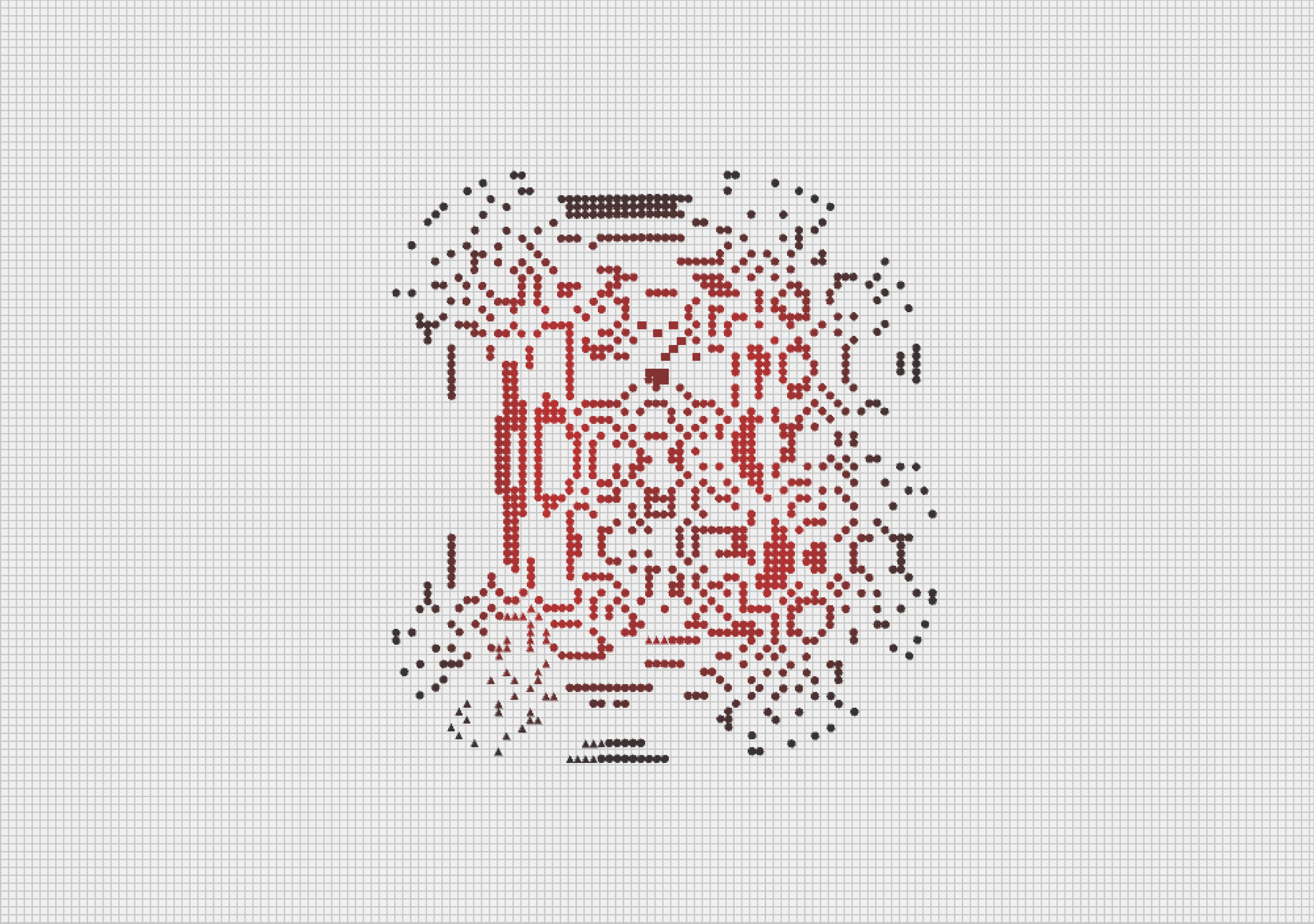
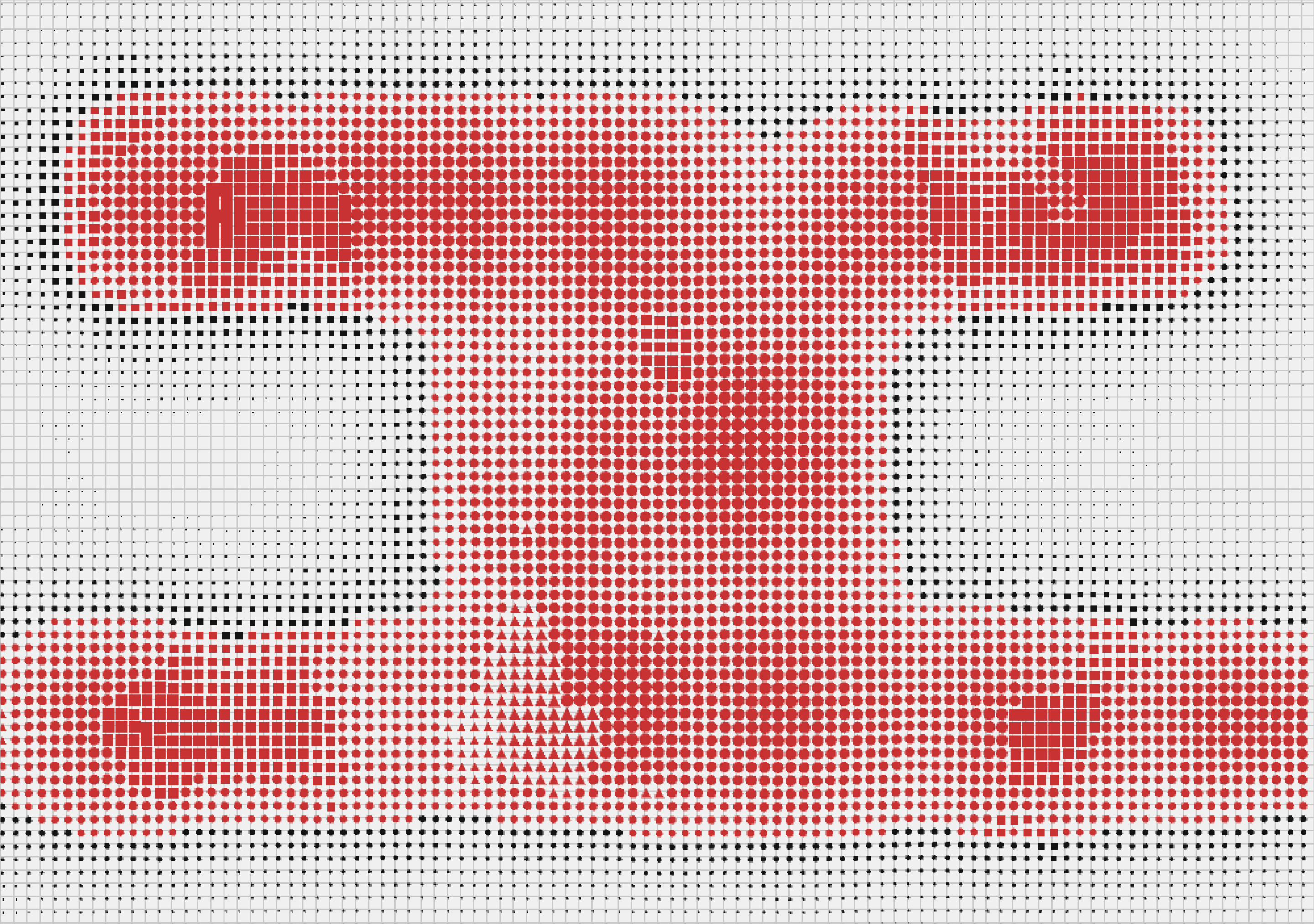
Machine Logs is my attempt to return to an autarkic form of new media by misusing conversational AI and forcing it into visual territory to produce uncanny generative art. This intentional form of vibe-coding (I hate the term) helps me revisit why I made the shift in the first place and explore what today’s misuse of ubiquitous AI can lead to. Here’s Tentacles, inspired by a tattoo studio designed by KIDZ Studio [9]. I’ll try to do this more frequently, hoping it leads to a more intelligent way of misusing AI now and in the near future. As Nam June Paik put it best: “I use technology in order to hate it properly,” which describes the misuse I’ve been chasing for a long time. [10]
Shorten this so that it’s social media friendly.
[1] https://www.moholy-nagy.org/photograms/
[2] https://www.artforum.com/features/walter-benjamins-short-history-of-photography-209486/
[3] https://www.sahanz.net/wp-content/uploads/SAHANZ18_paper_Esteban-Maluenda.pdf?utm_source=chatgpt.com
[4] https://www.mdpi.com/2076-3417/11/7/3290
[5] https://www.creativebloq.com/news/ai-image-generation-in-2023
[6] https://blog.google/innovation-and-ai/products/2024-ai-extraordinary-progress-advancement/
[7] https://time.com/6255952/ai-impact-chatgpt-microsoft-google/
[8] https://timrodenbroeker.de/learnings-from-the-bauhaus-about-art-and-techology/
[9] https://kidz.studio/sinners-tattoo-parlor
[10] https://www.theguardian.com/film/2023/may/21/nam-june-paik-moon-is-the-oldest-tv-review-engaging-film-about-the-video-art-pioneer?CMP=share_btn_url
Nam June Paik: Moon Is the Oldest TV review – enjoyable documentary about the video artist




January 5, 2026
article Tag
Machine Logs
First time writing about artificial intelligence after 5 years of using it. Reflecting on how my art-design practice was insidiously shaped by it.
AI, Art-Design Practice and the Bauhaus
I have never sat down to write my thoughts about the developments of AI in recent years and how it has impacted the way I do things. Lately, I’ve felt the urge to take a step back and timestamp this era in my practice so I’m more conscious of how I navigate toward and/or around it (before I start devouring my next PS5 agenda, lelz). At the core of why I do what I do, architecture still serves as the fundamental driver of my disposition toward how new technological developments signal the need to reinvent practice.
Out of the masters of the Bauhaus, all of whom I have attempted to probe and understand, Moholy-Nagy’s photograms [1] most strongly encapsulate Gropius’ vision of unity between art and technology. Photography, still new at the time and often used simply to capture scenes [2], was treated by Moholy-Nagy as part of the image-making process itself, or the collage, which is arguably one of the most important tools architects use to visualize space. Looking into this intentional misuse of technology strongly informed my attitude toward new tools: skeptical, yet eager to take hold of them and “enslave” [3] them.
Encounters with GenAI
Working with technology now, both in my [work-work] and my [things-that-replenish-my-soul-work] — (<- this em dash is legit) I try to keep them separate because I’m at a point in my life where I still can’t afford to merge them together haha — I’ve been thinking about how drastically AI has changed since my first encounter with it. When I was still tinkering with new media as a medium rather than a discipline, GenAI was mostly used for style transfer. Its hallucinations were intense, and it was difficult to insinuate recognizable form in its outputs (2020) [4]. I brought this “problem” into my studio classes to figure out what to do with it together with my students (early 2022). Because of AI’s visual primitivity at the time, design practice used it mainly to generate copy, effectively killing lorem ipsum placeholders (late 2022). From 2023 onward, image generation became the most successful business case for AI, sparking major debate in adjacent creative fields like illustration [5]. As an interaction designer and new media artist, it became harder to hold onto that architectural skepticism, as there was little room for meaningful misuse in the field I was in. In 2023, LLMs grew more sophisticated and more gated as competition between tech companies intensified [7]. By 2024, AI was reshaping how we search, and in 2025, its integration across nearly all search engines became evident, fueling a fixation on conversational design.
Attempts at Misusage
The primitive, drunken machine vision of AI in 2020 evolved into something I did not anticipate five years ago, and now I find myself at an impasse with it. This pushed me to revisit one of the original reasons I considered a career in technology: creative coding. Even though I no longer know how to do it from scratch, like most interaction designers I know, coding was our entry point into tech and design. Learning it was tedious, especially during a time when AI was almost nonexistent in the web sphere. I distinctly remember being fascinated when Tim Rodenbroker drew parallels between the Bauhaus Manifesto and the Creative Coding Manifesto [8], an idea that likely stemmed from John Maeda’s early explorations.
Machine Logs is my attempt to return to an autarkic form of new media by misusing conversational AI and forcing it into visual territory to produce uncanny generative art. This intentional form of vibe-coding (I hate the term) helps me revisit why I made the shift in the first place and explore what today’s misuse of ubiquitous AI can lead to. Here’s Tentacles, inspired by a tattoo studio designed by KIDZ Studio [9]. I’ll try to do this more frequently, hoping it leads to a more intelligent way of misusing AI now and in the near future. As Nam June Paik put it best: “I use technology in order to hate it properly,” which describes the misuse I’ve been chasing for a long time. [10]
Shorten this so that it’s social media friendly.
[1] https://www.moholy-nagy.org/photograms/
[2] https://www.artforum.com/features/walter-benjamins-short-history-of-photography-209486/
[3] https://www.sahanz.net/wp-content/uploads/SAHANZ18_paper_Esteban-Maluenda.pdf?utm_source=chatgpt.com
[4] https://www.mdpi.com/2076-3417/11/7/3290
[5] https://www.creativebloq.com/news/ai-image-generation-in-2023
[6] https://blog.google/innovation-and-ai/products/2024-ai-extraordinary-progress-advancement/
[7] https://time.com/6255952/ai-impact-chatgpt-microsoft-google/
[8] https://timrodenbroeker.de/learnings-from-the-bauhaus-about-art-and-techology/
[9] https://kidz.studio/sinners-tattoo-parlor
[10] https://www.theguardian.com/film/2023/may/21/nam-june-paik-moon-is-the-oldest-tv-review-engaging-film-about-the-video-art-pioneer?CMP=share_btn_url
Nam June Paik: Moon Is the Oldest TV review – enjoyable documentary about the video artist